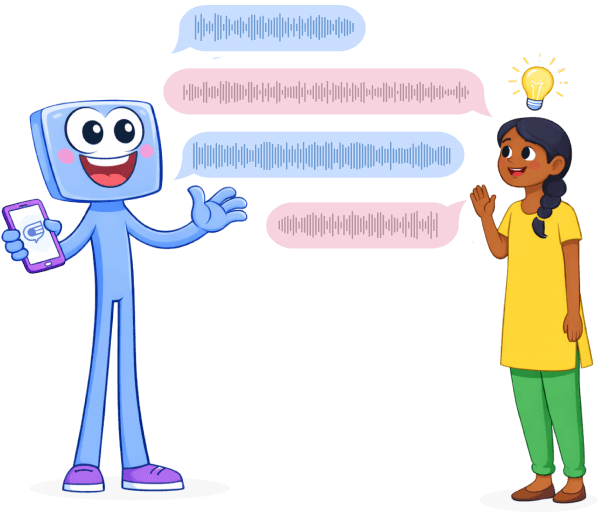
Teacher's Assistant for Conversational Learning
Conduct conversational activities such as vivas on student work, oral assessments, and guided learning conversations for your whole class with AI support.
ConvoEd acts as your teaching assistant. You define the activity and learning goals; ConvoEd conducts each conversation and brings back the insights.
AI can improve learning, but great teachers remain at the heart of education. We built ConvoEd to help teachers reach every student and help them reach their full potential.
How teachers use ConvoEd
ConvoEd conducts the conversation on your behalf. You set the activity and the goals. It runs each session and brings back the insights.
Viva on student work
Assign a viva to your whole class. ConvoEd reads each student's submission (code, writing, or other work) and conducts a focused voice dialogue, probing understanding and asking follow-up questions grounded in the actual artifact.
You assign the activity.
Share the submission with ConvoEd and set the scope: which concepts or criteria you want probed.
Each student completes a voice session.
ConvoEd opens the dialogue by referencing the student's specific work, then asks questions that go deeper based on their responses.
You receive a per-student summary.
ConvoEd flags areas of shallow reasoning or confusion so you know exactly where to follow up.
What students say about ConvoEd
The questions the bot asked often made sure I understood the material fully and was able to point out areas where I was incorrect, which I thought was helpful because I received immediate feedback. I also liked that I was able to talk about my thought process, and I think talking about it would really help the material stick in my brain.
I really like the fact that bot had my code and was asking probing questions about it, which I thought was really well done. The assistant was very polite, and very patient.
What makes it work
Conversational activities at class scale, learner profiles from every session, and summaries you can act on.
Voice conversation
Students speak naturally and ConvoEd listens, responds, and adapts. Best for vivas, oral assessments, and practice activities where spoken explanation matters.
Text conversation
Students type their responses. Same conversational depth and adaptive follow-up, in a text format. Useful where voice is not practical.
How It Works

Set up conversational activities
Choose an activity: a viva on student work, an oral conceptual check, or a Socratic practice sequence. Set your rubric and learning goals, then assign it to your class.
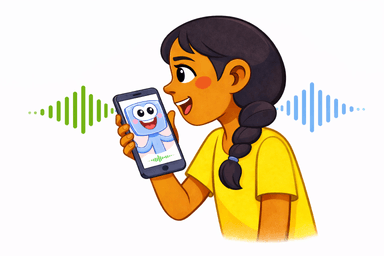
Students engage in conversation
Each learner holds a personalized conversation with ConvoEd: explaining ideas, answering probes, and receiving immediate feedback, often in the language they find most comfortable.

Build understanding through dialogue
Guided questions, clarifications, and feedback help students consolidate concepts and surface misconceptions before high-stakes assessments.
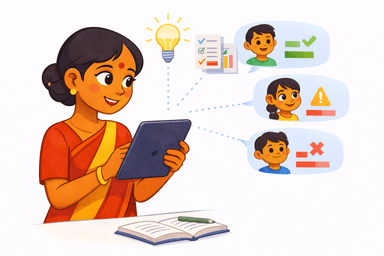
Review insights and follow up
You receive summaries grounded in conversational evidence: who needs support, which ideas are shaky, and how conversational evidence complements written work.
Supported By


Start assigning conversational activities.
Use ConvoEd for vivas, oral assessments, and multilingual dialogue without extra time on your end.
Login